
Step-by-Step Maintenance for Geothermal Cooling
Imagine slashing your summer cooling bills while simultaneously reducing your carbon footprint. Sounds like a dream, right? With geothermal cooling, it's a very attainable reality. However, like any sophisticated system, your geothermal setup needs consistent care to maintain peak performance and efficiency.
Geothermal cooling, at its core, taps into the Earth’s stable underground temperature to provide efficient and environmentally friendly climate control. By circulating fluid through a ground loop, your system either absorbs heat from your home in the summer or releases heat into the ground in the winter. This process drastically reduces your reliance on traditional, energy-intensive air conditioning and heating methods. Properly maintained geothermal systems offer significant home energy savings and contribute to a more sustainable home energy approach.
One of the simplest, yet most vital, maintenance tasks you can perform yourself is regularly checking your air filter. A dirty air filter restricts airflow, forcing your system to work harder and decreasing efficiency. Aim to inspect your filter monthly and replace it every one to three months, depending on usage and air quality.
Step-by-Step Geothermal Cooling Maintenance
Maintaining your geothermal cooling system doesn’t require you to be a seasoned technician. With a few simple steps, you can ensure your system operates efficiently and reliably for years to come. The goal is to promote optimal energy efficiency and prevent costly repairs down the line.
1. Regular Visual Inspections
Begin with a comprehensive visual inspection of both your indoor and outdoor components. This includes the heat pump unit inside your home and any visible parts of your ground loop system (if accessible).
Indoor Unit (Heat Pump): Look for signs of leaks, corrosion, or damage to the unit's casing. Check for any unusual noises during operation, such as banging, grinding, or hissing sounds. These could indicate a problem with the compressor or other internal components. Piping and Connections: Inspect all visible pipes and connections for leaks. Even small drips can lead to significant water loss and reduce system efficiency. Ground Loop Area (If Accessible):While most of the ground loop is buried, check the area around any exposed piping or access points for signs of soil erosion or damage.
2. Air Filter Maintenance
As mentioned earlier, maintaining a clean air filter is paramount for geothermal system efficiency.
Location: Your air filter is typically located within the indoor unit (heat pump). Refer to your owner's manual for the exact location. Inspection: Remove the filter and hold it up to a light source. If you can't see light clearly through the filter, it's time to clean or replace it. Cleaning/Replacement:
Disposable Filters: Replace with a new filter of the same size and type.
Washable Filters: Wash the filter with mild soap and water, rinse thoroughly, and allow it to dry completely before reinstalling. Frequency: Check monthly and replace or clean every 1-3 months, depending on air quality and usage.
3. Coil Cleaning
The evaporator and condenser coils play a crucial role in heat transfer within your geothermal system. Dirty coils reduce efficiency and can lead to overheating.
Evaporator Coils (Indoor Unit): These coils are located within the indoor unit. You can clean them with a soft brush attachment on a vacuum cleaner. Gently remove any dust or debris from the fins. Be careful not to bend or damage the fins. Condenser Coils (Outdoor Unit): Geothermal systems utilize the ground for heat exchange, so the "outdoor" component is typically a ground loop. However, any exposed components (like manifolds or connection points) should be kept clear of debris. Professional Cleaning:Consider professional coil cleaning every 2-3 years. Technicians have specialized equipment and chemicals to thoroughly clean the coils without damaging them.
4. Ground Loop Monitoring (Professional)
The ground loop is the heart of your geothermal system, and its proper functioning is crucial. While you can't directly inspect the underground piping, you can monitor system performance for signs of issues.
Pressure Monitoring: A geothermal technician can check the pressure within the ground loop to ensure it's within the optimal range. Low pressure can indicate a leak, while high pressure can signify blockage. Flow Rate Measurement: Technicians can also measure the flow rate of the fluid circulating through the ground loop. Reduced flow rate can indicate a problem with the pump or a blockage in the piping. Temperature Monitoring: Monitoring the temperature of the fluid entering and exiting the ground loop can help identify inefficiencies or problems with heat transfer. Frequency: Schedule professional ground loop monitoring every 3-5 years, or sooner if you notice any significant changes in system performance.
5. Condensate Drain Line Maintenance
During the cooling season, your geothermal system produces condensation. This condensate needs to drain properly to prevent water damage and mold growth.
Location: The condensate drain line is typically a PVC pipe that exits the indoor unit (heat pump). Inspection: Check the drain line for clogs or blockages. You can use a wet/dry vacuum to clear any debris from the line. Cleaning: Pour a cup of distilled white vinegar down the drain line every few months to prevent algae and mold growth. Emergency Drain Pan: Ensure the emergency drain pan (located beneath the indoor unit) is clear and free of debris.
6. Professional System Checkup
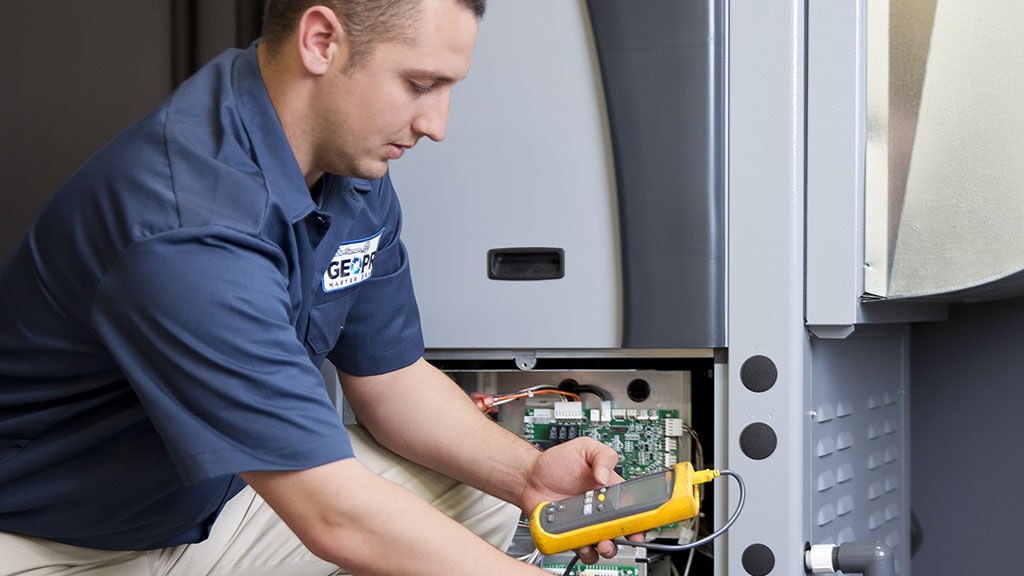
Schedule a professional maintenance checkup with a qualified geothermal technician at least once a year. A technician can perform a more in-depth inspection of your system, including: Refrigerant Charge: Checking and adjusting the refrigerant charge to ensure optimal cooling performance. Electrical Connections: Inspecting and tightening electrical connections to prevent malfunctions. Component Testing: Testing the various components of the system, such as the compressor, fan motor, and pumps, to identify any potential issues. System Optimization: Optimizing the system settings for maximum energy efficiency.
Geothermal Cooling Maintenance FAQs
Keeping your geothermal system running smoothly requires understanding its basic needs. Here are some frequently asked questions to help you stay informed.
How often should I change my geothermal system's air filter?
Aim to inspect your air filter monthly and replace it every one to three months. The frequency depends on factors like air quality, the presence of pets, and how often you run your system. A clogged filter forces your system to work harder, reducing efficiency and potentially causing damage.
What are the signs that my geothermal system needs professional maintenance?
Pay attention to the following warning signs: unusual noises, reduced cooling or heating performance, increased energy bills, leaks around the unit, and frequent cycling (turning on and off more often than usual). If you notice any of these, contact a qualified geothermal technician for an inspection.
Can I perform all geothermal maintenance tasks myself?
While some maintenance tasks, like air filter replacement and condensate drain cleaning, are relatively straightforward, others require specialized knowledge and equipment. Ground loop monitoring, refrigerant checks, and component testing should always be performed by a qualified professional. Attempting these tasks yourself could void your warranty or damage your system.
What is the average lifespan of a geothermal cooling system?
With proper maintenance, a geothermal system can last for 20-25 years or even longer. The ground loop, which is the most expensive component to replace, can last for 50 years or more. Regular maintenance is crucial for maximizing the lifespan of your system and protecting your investment.
Does geothermal cooling require more maintenance than traditional HVAC systems?
Geothermal systems generally require less maintenance than traditional HVAC systems. They have fewer moving parts and are less exposed to the elements. However, regular maintenance is still essential for ensuring optimal performance and longevity. The ground loop, in particular, requires periodic professional monitoring to ensure its continued functionality.
Optimizing Your Geothermal Cooling for Home Energy Savings
Beyond basic maintenance, several strategies can enhance your geothermal cooling system's efficiency and maximize your home energy savings. These strategies involve optimizing system settings, improving home insulation, and utilizing smart technology.
Programmable Thermostats: Install a programmable thermostat to automatically adjust the temperature based on your schedule. Lowering the temperature when you're away from home or asleep can significantly reduce energy consumption.
Smart Thermostats: Consider upgrading to a smart thermostat, which learns your preferences and automatically adjusts the temperature for optimal comfort and energy savings. Many smart thermostats can also be controlled remotely via smartphone or tablet.
Insulation: Ensure your home is properly insulated to minimize heat gain during the cooling season. Focus on insulating your attic, walls, and floors. Seal any air leaks around windows, doors, and other openings.
Window Treatments: Use window treatments, such as blinds, shades, or curtains, to block sunlight and reduce heat gain. During the hottest part of the day, close your window treatments on the south and west-facing sides of your home.
Landscaping: Plant trees or shrubs around your home to provide shade and reduce heat gain. Deciduous trees are particularly effective, as they provide shade in the summer and allow sunlight to pass through in the winter.
Regular System Checks: Schedule regular maintenance checkups with a qualified geothermal technician to ensure your system is operating at peak efficiency. A technician can identify and address any potential issues before they become major problems.
Taking proactive steps to maintain your geothermal cooling system isn't just about preventing problems; it's about maximizing your investment and ensuring long-term energy efficiency. By following these simple steps and scheduling regular professional checkups, you can enjoy reliable, cost-effective cooling for years to come, all while contributing to a more sustainable future. With a little attention, your geothermal system will continue to deliver comfortable and efficient cooling, saving you money and reducing your environmental impact.
Posting Komentar untuk "Step-by-Step Maintenance for Geothermal Cooling"